

Goethe knew long ago that stays in Italy can foster creativity and further one’s education. Over the past three months, I too have been able to experience this whilst undertaking a research stay at the European University Institute (EUI) in Florence/Fiesole. The research stay took place as part of the Max Planck Law Exchange Programme, which awards two places at the EUI each year to researchers from Max Planck Law. My experience provides an opportunity to reflect here on research environments, as well as on the similarities and differences between the MPIL and the EUI.
As part of the Max Planck Society, the MPIL is research-focused and does not offer degree programmes, only PhD positions. The EUI, on the other hand, offers master’s and doctoral programmes, which are also accompanied by a greater number of professorships. The institutes therefore differ in terms of their structure, which is why I would like to compare not the institutes themselves, but rather my experience as a PhD student.
Visiting Researchers at the EUI
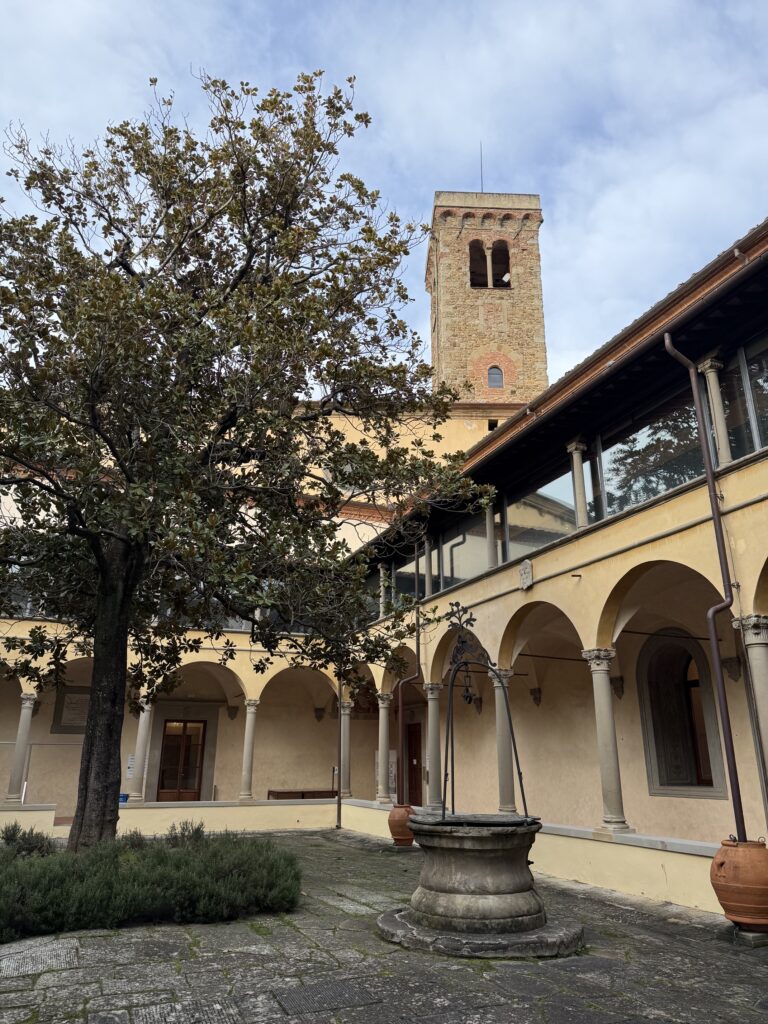
My research stay began in early March with a helpful introduction to the campus, the library and other useful information about the EUI. On this occasion, I also met other visiting researchers with whom I spent much time over the following months, both at the EUI and in my free time. Overall, the EUI has an impressive community of visiting researchers, ranging from PhD students and postdocs to professors.
At the EUI, visiting researchers are mentored by a professor who agrees to act as their supervisor. In my case, this was Professor Martijn Hesselink, whom I met for a lengthy chat over a coffee. The opportunity for this kind of personal mentoring is certainly facilitated by the bigger number of professorships at the EUI (compared to the MPIL).
Seminars and Events
Similar to the research seminars at the MPIL (Tuesday meetings), some – though not all – professors at the EUI organize seminars in which researchers’ drafts are discussed. I took part in Professor Gráinne De Búrca’s lunch discussions and was also able to discuss my dissertation topic with her on several occasions. In comparison to the Tuesday meetings at the MPIL, where one researcher is given the opportunity to present a paper of up to 40 pages each week, the papers presented in the lunch discussions are shorter (max. 15 pages). At the same time, this means that two researchers can always present their papers in a single session. I found the atmosphere and the feedback during these sessions to be very constructive and well-meaning.
Even outside these lunch discussions, life at the EUI (much like at the MPIL) is far from boring: there are numerous seminars, book presentations and working groups. I took part in the EU Law Working Group and the Constitutional Law Working Group. In the former, I also gave a presentation in May on part of my doctoral thesis and received helpful feedback. The events were attended by scholars specializing in both EU law and international law.
At the EUI, the work cycle is more strictly governed by deadlines: particularly at the start of their doctoral theses, PhD students are required to submit shorter papers by specific deadlines. This naturally creates pressure, but it might also be a positive factor in helping one make progress in the marathon that is a doctoral thesis.
Fostering a Sense of Community
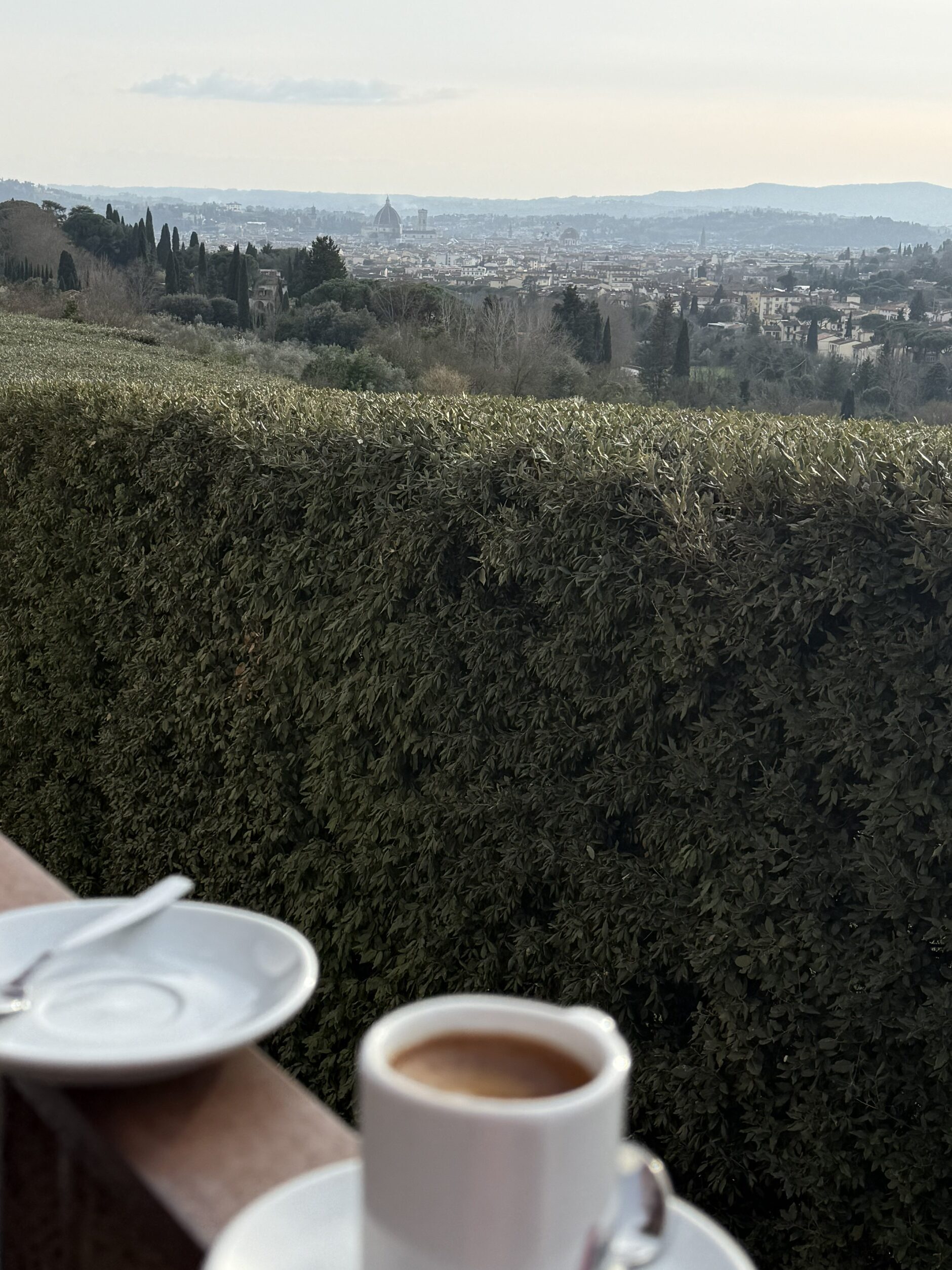
Another distinctive feature of the EUI is undoubtedly its impressive campus. The EUI comprises several villas and palaces, most of which are situated on the hills overlooking Florence; the Palazzo Buontalenti, moreover, is in the city’s historic centre. I found the atmosphere very inspiring and really enjoyed my walks through the campus gardens during breaks, which also gave me plenty of ideas. The Neuenheimer Feld, despite its idyllic location in the Neckartal, unfortunately cannot compete with this. In terms of infrastructure, the excellent canteen at the EUI is also worth highlighting, as is the range of food (and coffee!) on offer in its various buildings.
These meeting places also foster a sense of community. This sense of community is further strengthened by collaborative work in the (air-conditioned) library in Badia and in the study rooms. This is another key difference compared to the MPIL, where work is primarily carried out in fixed offices. While the encounters in the EUI library fostered interaction amongst the researchers, I enjoy the comfort of working in my fixed office with my own desk, monitors, etc. at MPIL.
Another difference is the range of leisure activities on offer at the EUI. I particularly enjoyed the sports programme. Here, I was able to play football twice a week with many other researchers (including several professors) and EUI staff. Furthermore, the EUI offers its own language courses, which are free for visiting students. I took advantage of this opportunity and enrolled on an Italian B1.3 language course. It was a good way to get to know researchers from the EUI, including those from other disciplines, in a relaxed setting.
However, due to its geographical location and the many activities organised within the EUI, researchers can also be somewhat isolated from the outside world. I think it’s important to seek out hobbies outside the ‘EUI bubble’ and, in doing so, discover even more of the fascinating city life in Florence.
All in all, the research stay showed me how much research environments and infrastructure shape academic work and the overall atmosphere. I found the international environment, the various events and the campus at the EUI to be very inspiring. Since being in Florence, I know from my own experience how important it is for visiting researchers to be integrated into the life of the institute. And thanks to the atmosphere and sense of community at the EUI, you don’t have to be Goethe to leave Italy feeling more inspired than you did on arrival.